GPT-6 Astra: from brief to editable scene
A published Blender example shifts the question from image quality to the continuity of a design through revisions.
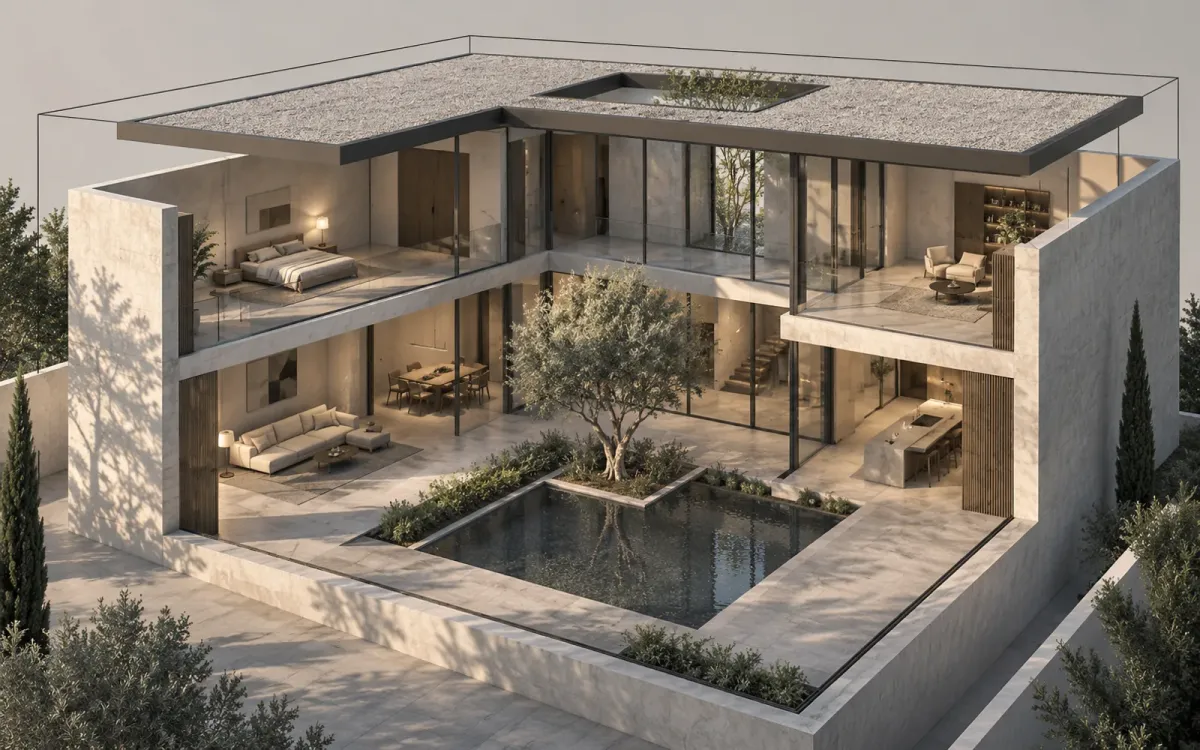
OpenAI’s architectural visualization example follows a house from a written brief into an editable Blender scene, with preview renders guiding revisions. We read it as a workflow example: the scene can be inspected and changed after the first image.
GPT-6 Astra’s model documentation lists text input and output, image input and tool use. Image generation is a separate tool. The useful distinction for a designer is which part of a result exists as editable geometry, which is an image and which is only a written suggestion.
Start with a bounded architectural task
For an office fit-out trial, we would provide a measured shell, fixed entrances and elements that must remain. The task could be two reception layouts. Before adding materials, the assistant should expose missing information and present a plain plan or solid view that lets us inspect circulation and proportions.
Keep the revision traceable
- Save the brief and model version used for each proposal.
- Name the objects that belong to a design decision, so a later edit has a clear target.
- Record what changed and compare a plain geometry view with the rendered image.
OpenAI’s example uses Blender’s Python API and repeated previews. That demonstrates a route to an editable visualization; it does not establish that a proposed building meets its site, structural or construction requirements.
What we would test at Fraktal
Our proposed test asks whether another designer can reopen the scene, identify an accepted decision and revise it without rebuilding the study. We would assess the brief, editable geometry and revision record together.