The render is ready. What comes next?
A material study becomes useful when its images answer one question and the accepted change returns to the project.
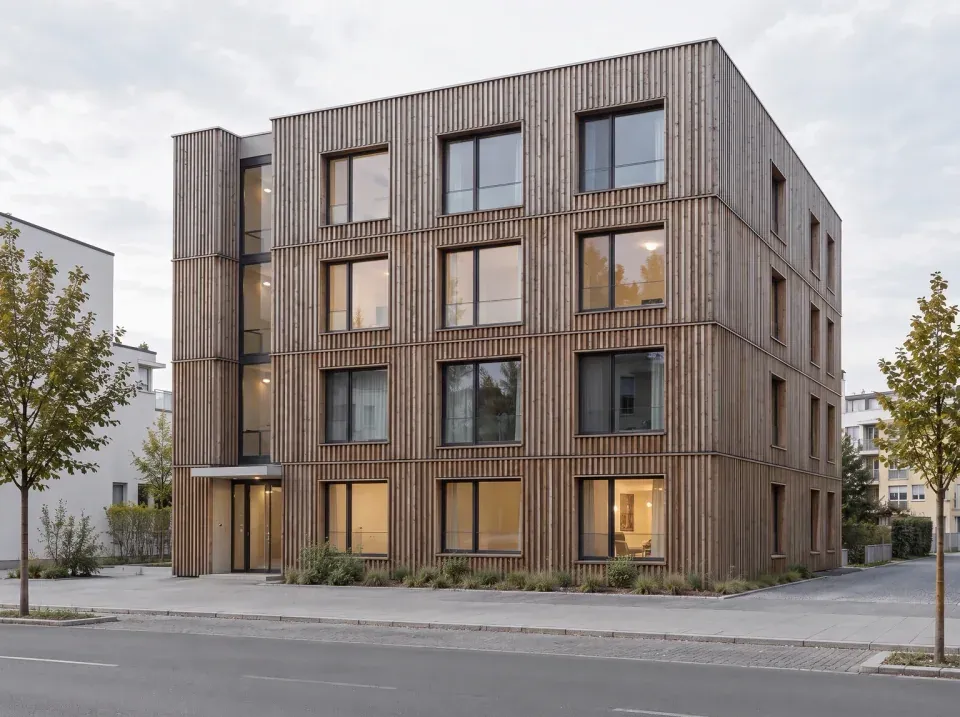
A meeting can end with everyone choosing a favourite image and nobody knowing what to develop. If the lighting, planting, cladding and building all change, the team cannot explain the preference. We start a visualization study by naming the decision it should support.
Hold a shared reference
For a facade with an agreed opening arrangement, the question might be timber versus a pale mineral finish. Use a view from the current model and keep the camera, openings and principal shadows as consistent as possible. Inspect every result for changes outside the requested material study.
OpenAI’s image tools support iterative edits, but iteration does not guarantee geometric consistency. Archly’s node canvas and image comparison view can keep the reference beside its alternatives. Separate branches can address cladding, landscape and atmosphere, with the changed variables stated beside them.
Separate the feedback
- Material preference: develop the appearance, then check samples and specifications.
- Spatial change: return a deeper balcony or shifted opening to the model for architectural review.
- Atmosphere: use warmer light to guide presentation without presenting it as measured daylight performance.
Return the decision to the drawing
Two different review tasks
- In the image
- Compare material character, atmosphere and visible changes against the reference. Record which qualities the team wants to develop.
- In the project
- Resolve openings, dimensions, junctions and balcony depth in drawings or a model. Review those decisions before treating the image as an agreed design.
A useful note might read: retain the openings, develop the lighter finish, investigate balcony depth separately. Keep the selected image and starting reference with that note. In this workflow, the designer records the decision and applies it to the project.
The designer then updates the authoritative model, produces a fresh view and checks whether the idea survives. Label exploratory images as studies and leave unresolved questions visible. The meeting should end with a next action another person can understand.