Lab · AA DRL 2018–2020, revisited
FLUX Revisited
In 2018, at the AA Design Research Lab in London, a team of four asked what architecture could become if every part of it could move, sense its neighbours and decide. FLUX is where Fraktal’s geometry began. We are now rethinking it as a shelter that one command could deploy after an earthquake.
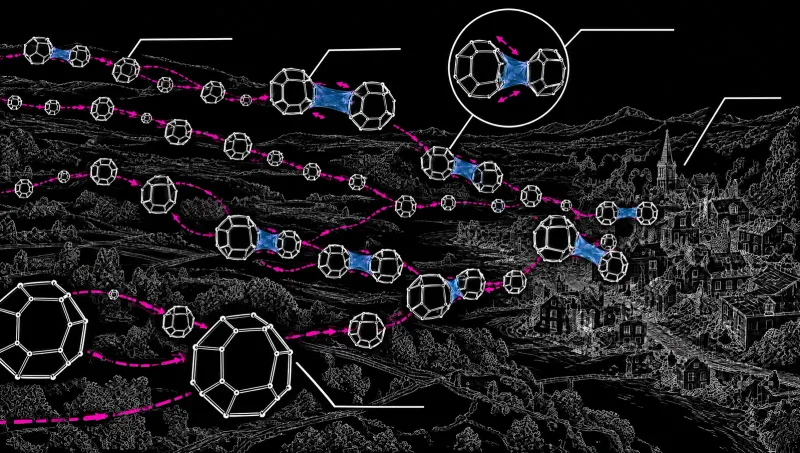
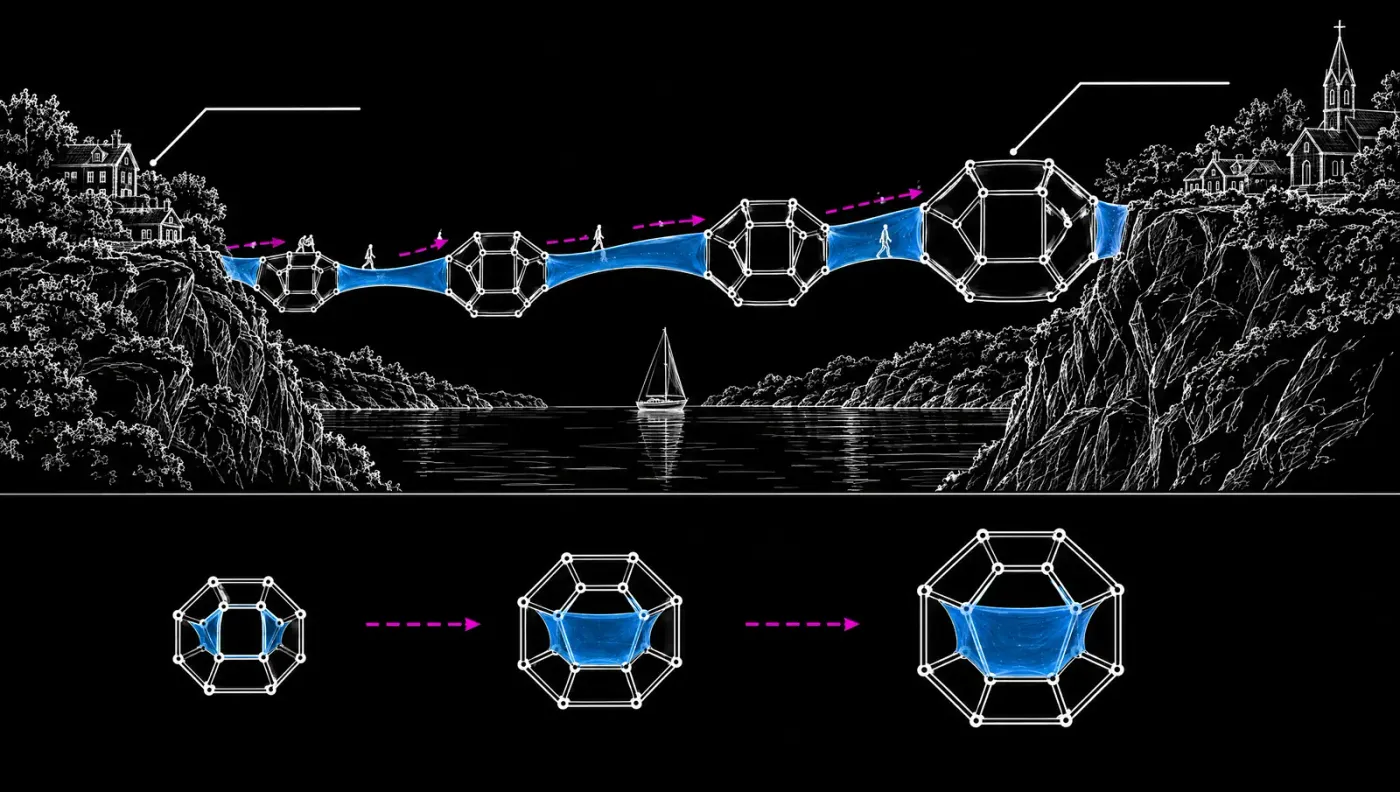
After an earthquake, one command releases the units. They roll out, lock face to face into a shelter and by evening span the town as a bridge. AI-assisted visualization, 2026.
What if architecture could assemble itself where it is needed?
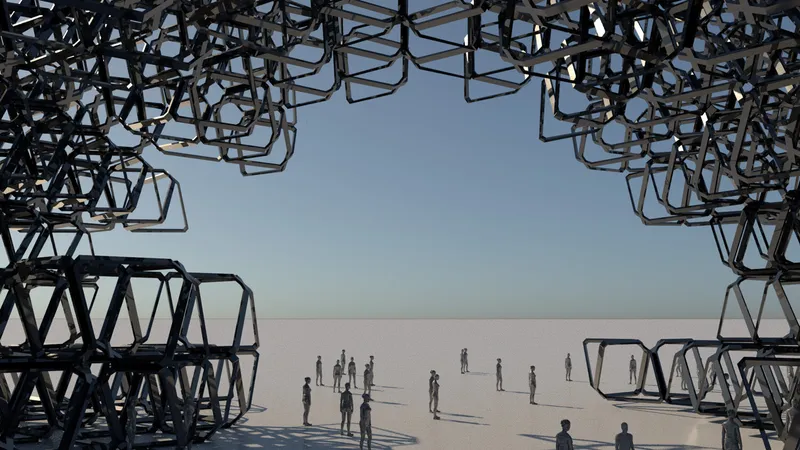
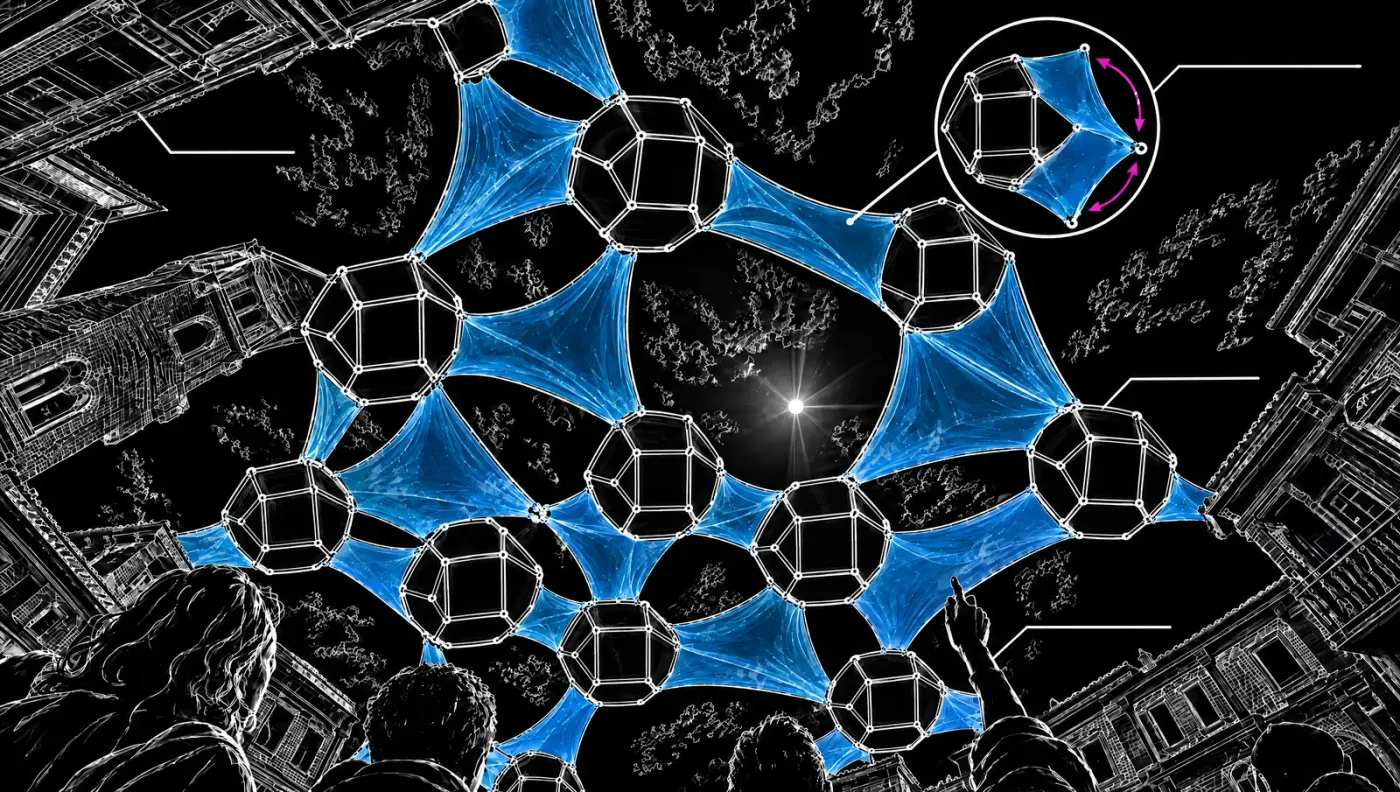
FLUX proposed an architecture of identical units. Each one is a linear frame in the shape of a truncated octahedron, the only Archimedean solid that fills space without gaps. Units lock together face to face, so a single part can become a cluster, a canopy or a structure the size of a square.
Each unit was treated as an agent. Instead of following a fixed drawing, units follow local rules: keep a distance, align with neighbours, dock where support is needed. The structure is the result of many small decisions, and it can be undone and rebuilt when conditions change.
In 2018, using the word agent for a building component was unusual. Today agents write code, search documents and draw. The question FLUX asked is still open: who makes design decisions, by which rules, and who can change them?
One unit, four scales
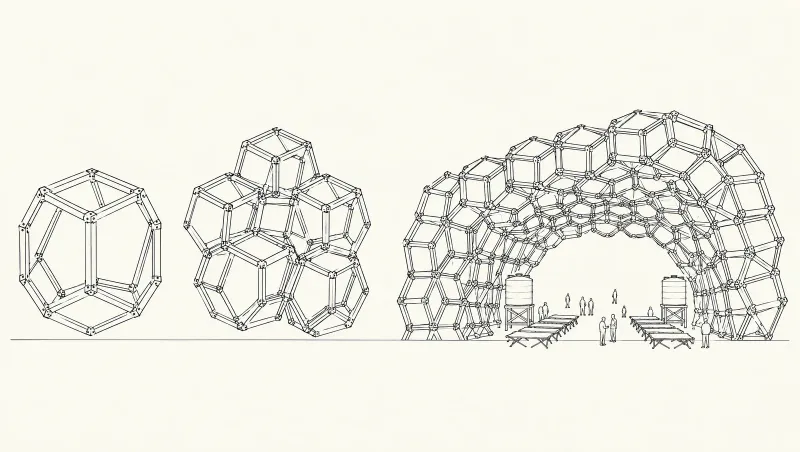
The same frame, repeated. Choose a scale to watch the units assemble. This is an explanatory drawing, not a simulation of the original project.
Units arrive one by one and dock where the canopy needs depth. People walk underneath; the shape follows use, not a fixed drawing.
A unit that fills space
The truncated octahedron packs space completely, so any face can meet another unit. FLUX drew it as a frame, not a solid: lines that carry structure and leave room for light and view. The same unit reads differently at every scale, which is why it keeps returning in our work.
Units as agents
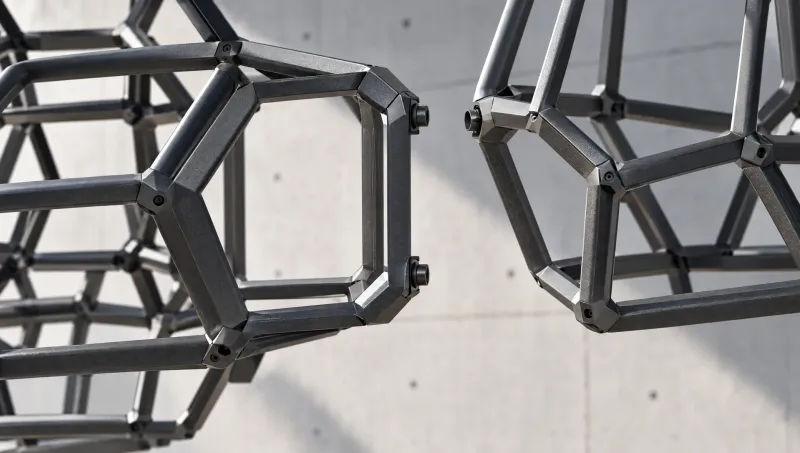
No unit waits for a foreman. FLUX explored rules that let units decide locally: where to dock, when to leave, how to share load with their neighbours. After an earthquake, such a structure could gather as shelter, bridge a broken road or a river, then disperse.
Node, code, space
The project sat where three fields meet. Hardware: actuated nodes that lock and release. Software: the rules and simulations that coordinate them. Architecture: the space people actually stand in. None of the three is enough on its own.
2018 and 2026